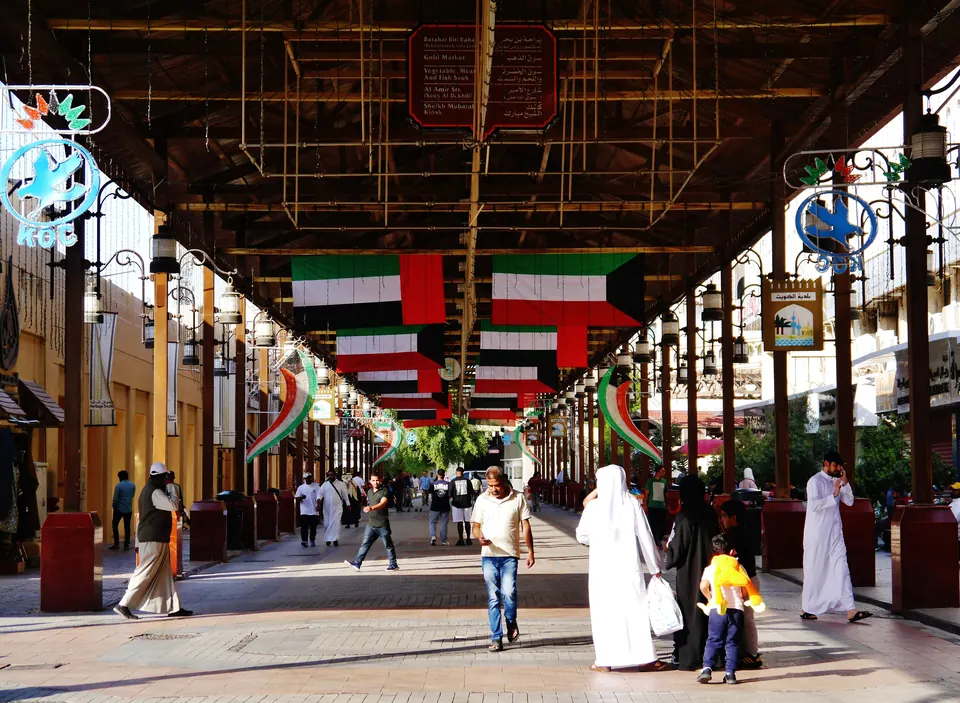
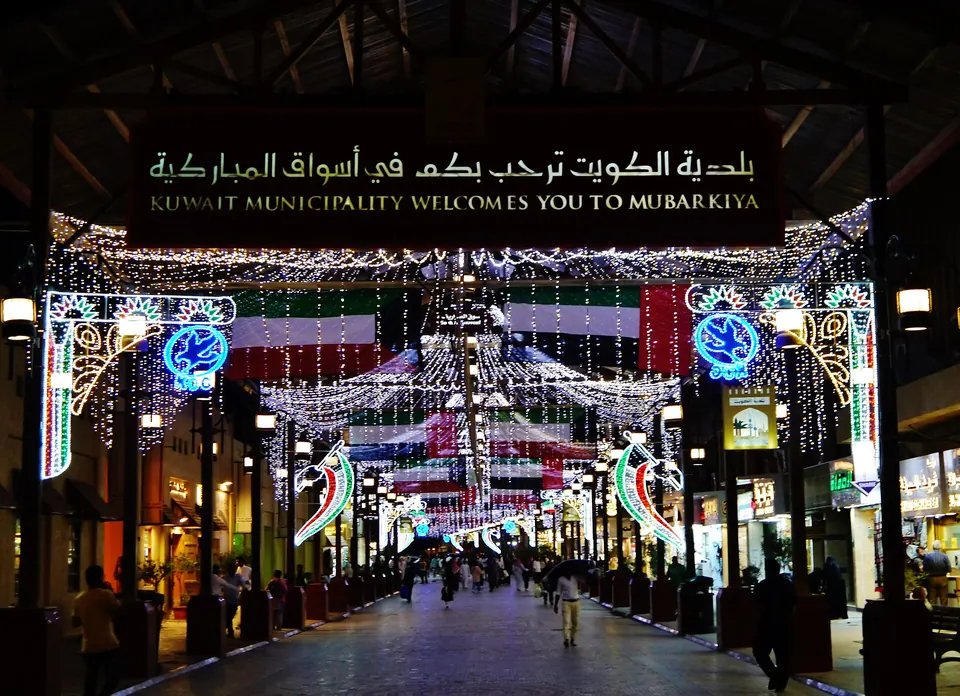
For at least two centuries traders have sold dates, spices, oud, textiles and gold in the lanes of Souq Al-Mubarakiya — the best place to feel the rhythm of old Kuwait, and to eat well.
Between Abdullah Al-Mubarak, Abdullah Al-Salem and Palestine streets, Al-Mubarakiya was the commercial heart of Kuwait long before oil. Its lanes are still organised by trade: dates and honey, spices and incense, perfumes and oud, carpets and antiques, dishdashas and bishts, gold and silver.
Two small museums are tucked inside — the kiosk of Sheikh Mubarak Al-Sabah, where the ruler once met people and conducted business, and the first pharmacy in Kuwait. Around the courtyards, open-air restaurants serve Kuwaiti and Persian dishes and cafés brew tea over coals; in hot weather, fine mist cools the tables.
On 31 March 2022 a fire destroyed part of the market. A reconstruction of the damaged section was contracted in 2024 and work continued through 2025, so expect some lanes to be closed or under works.
Highlights
- The date and spice lanes — taste before you buy
- The kiosk of Sheikh Mubarak and Kuwait’s first pharmacy
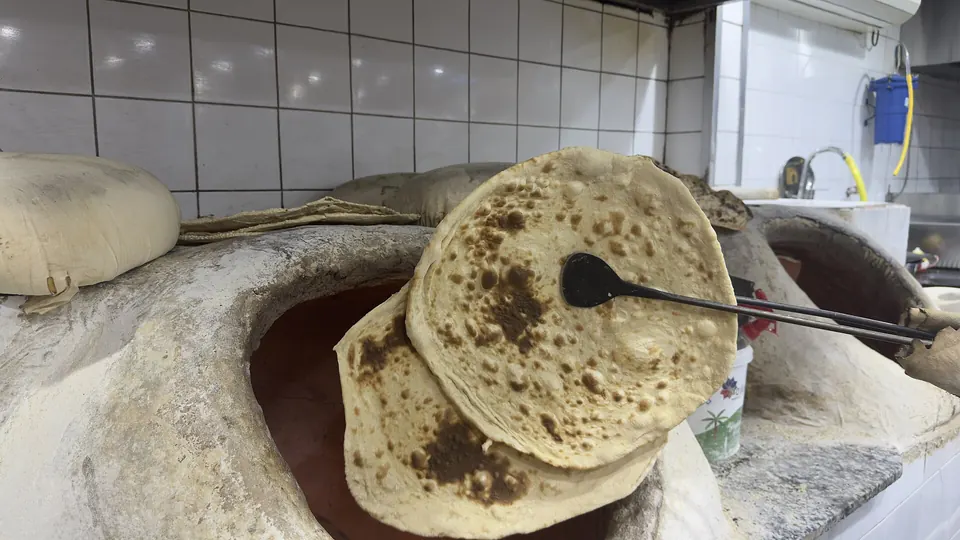
- Grilled meats, fresh Iranian bread and sweet tea in the courtyards
Good to know
- Evenings are the most atmospheric time; many shops close for a few hours in the afternoon and open later on Fridays.
- Bargaining is normal for carpets, antiques and souvenirs, but not for food.
- Admission is free.