Culture & heritage
The story of Kuwait
Pearl divers and shipbuilders, Bedouin weavers, the diwaniya and the making of a modern nation.
01
Seafaring heritage
A nation of pearl divers and shipbuilders
Before oil, Kuwait lived from the sea. Every summer the pearling fleet left for months on the oyster banks of the Gulf: the nokhatha (captain) commanded, divers went down on a single breath weighted by stones, and the haulers on deck pulled them up by rope, while a singer kept spirits up with the work songs that became the fijiri tradition.
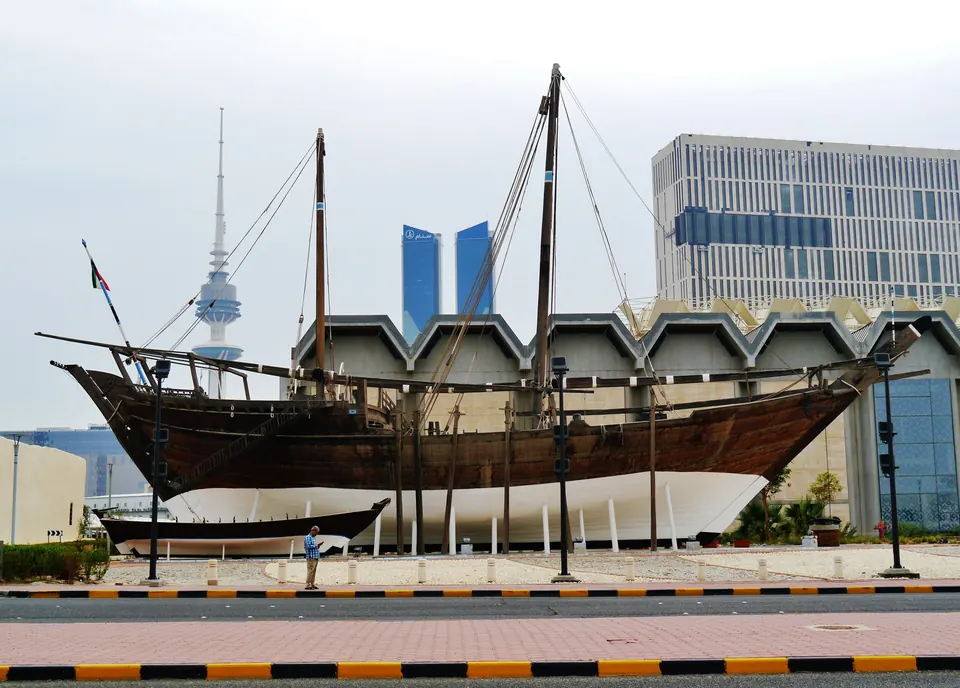
In winter, Kuwait’s ocean-going dhows — the boom, the baghla, the jalibut — sailed with the monsoon winds to Basra, India and East Africa, carrying dates, timber, spices and textiles. Kuwaiti shipwrights were renowned throughout the Gulf.
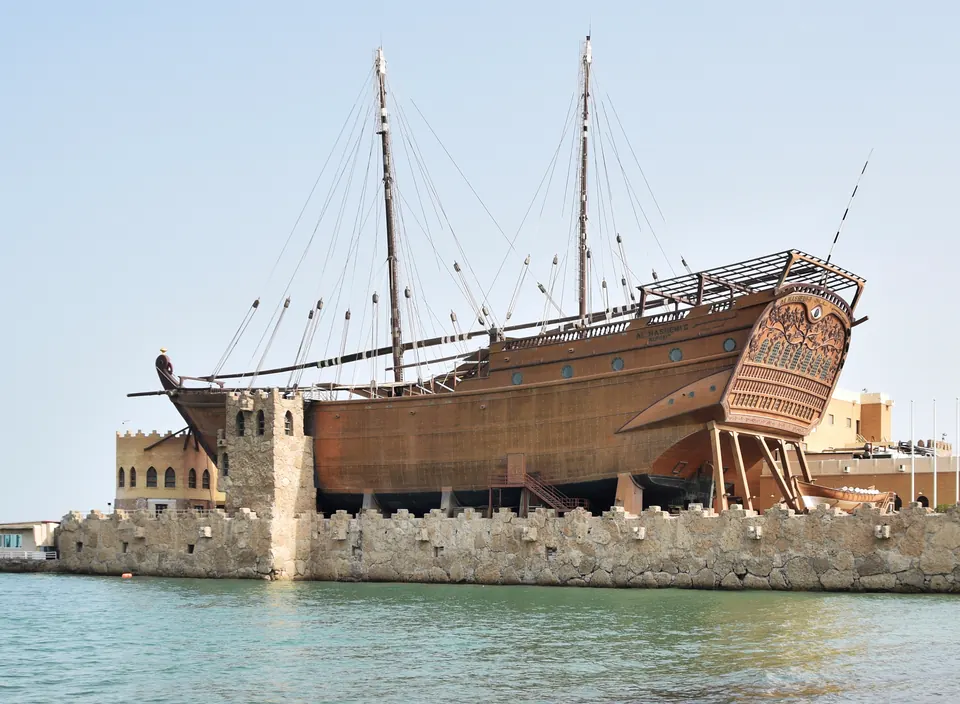
The pearl trade collapsed in the 1930s with the arrival of cheaper cultured pearls and the world depression — just before oil changed everything. The skills survive: the Al-Hashemi-II, built in Kuwait, is described as the largest wooden dhow ever made, and young Kuwaitis still take part in annual pearl-diving re-enactments that end with a traditional homecoming, the qafal.
02
Desert craft
Al Sadu: the language of the loom
Bedouin women wove the desert into cloth. On ground looms they turned sheep’s wool, goat hair and camel hair into tent walls, rugs, saddle bags and camel decorations, with bands of red, black, white and natural colours.
Every motif carries meaning — stars, palm trees, eyes, combs, the tracks of animals — so that a woven panel can be read like a story of the weaver’s life and land. In 2020 the traditional weaving of Al Sadu, nominated jointly by Kuwait and Saudi Arabia, was inscribed on UNESCO’s Representative List of the Intangible Cultural Heritage of Humanity.
03
Social life
The diwaniya: Kuwait’s open door
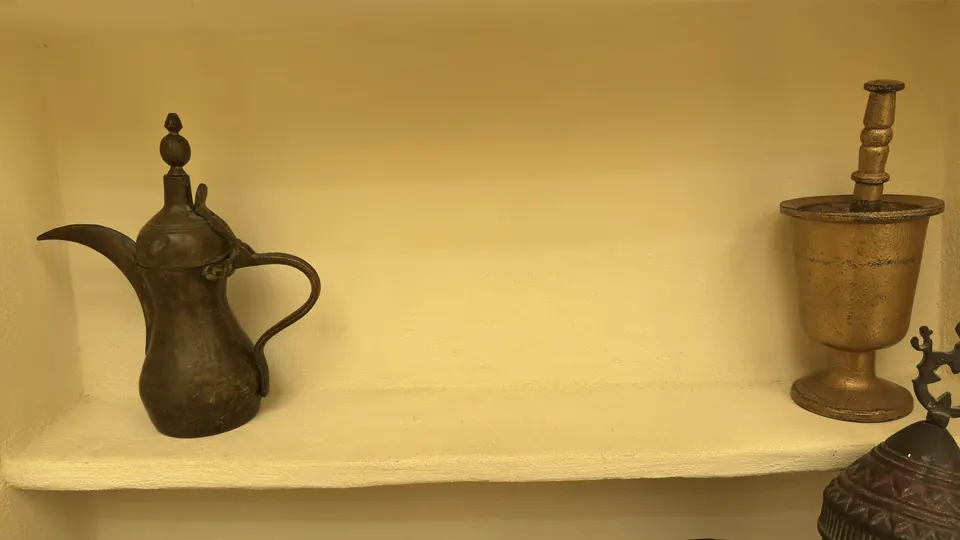
The diwaniya is both a room and a gathering. Traditionally a reception hall attached to the house, it is where men meet in the evenings to drink coffee and tea, talk business, discuss the news and settle community matters. Many families hold theirs on fixed nights each week.
Hospitality is the rule: guests are greeted, offered coffee and dates and seated by age and standing. The diwaniya has long played a role in Kuwait’s public life, as a place where ideas are debated face to face.
Visitors usually experience a diwaniya by invitation. If you are invited, dress smartly and modestly, greet the host first and accept at least one cup of coffee.
04
Architecture
Courtyards, coral stone and city walls
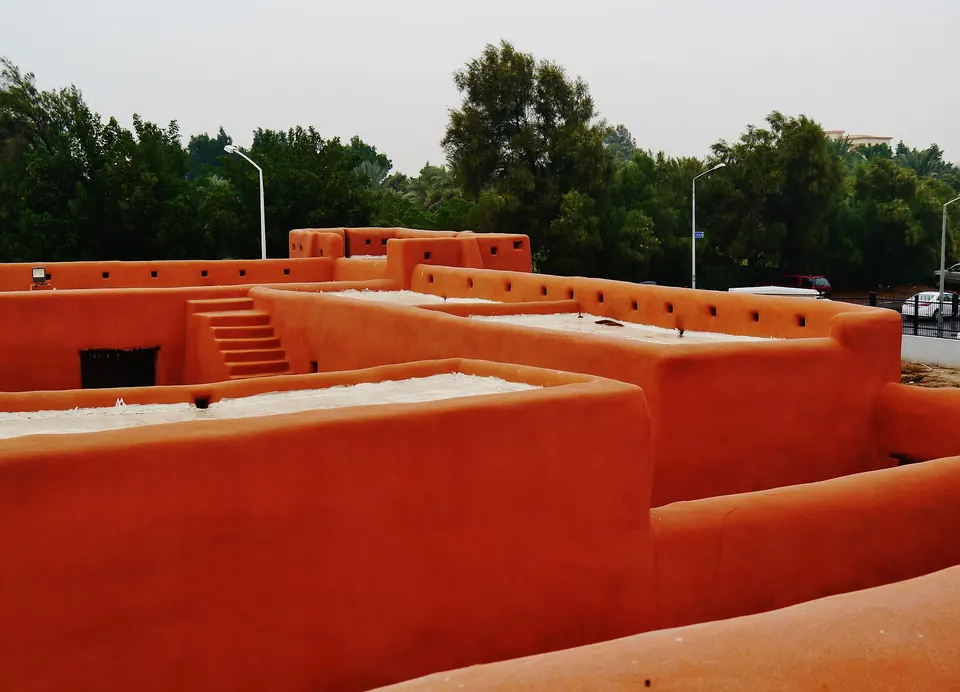
Old Kuwaiti houses turned inward around courtyards, built of mud brick and sea stone with roofs of mangrove poles imported from East Africa. Narrow lanes kept them shaded, and the merchants’ houses faced the sea.
The town was protected by a succession of walls; the last, built in 1920, was demolished in 1957 as the city expanded, but its gates were preserved and its line survives in the Soor streets and Al Shaheed Park. Heritage houses such as Dickson House, Sadu House and Bait Al-Othman give a sense of how people lived.
05
Arts
Songs of the sea, stars of the screen
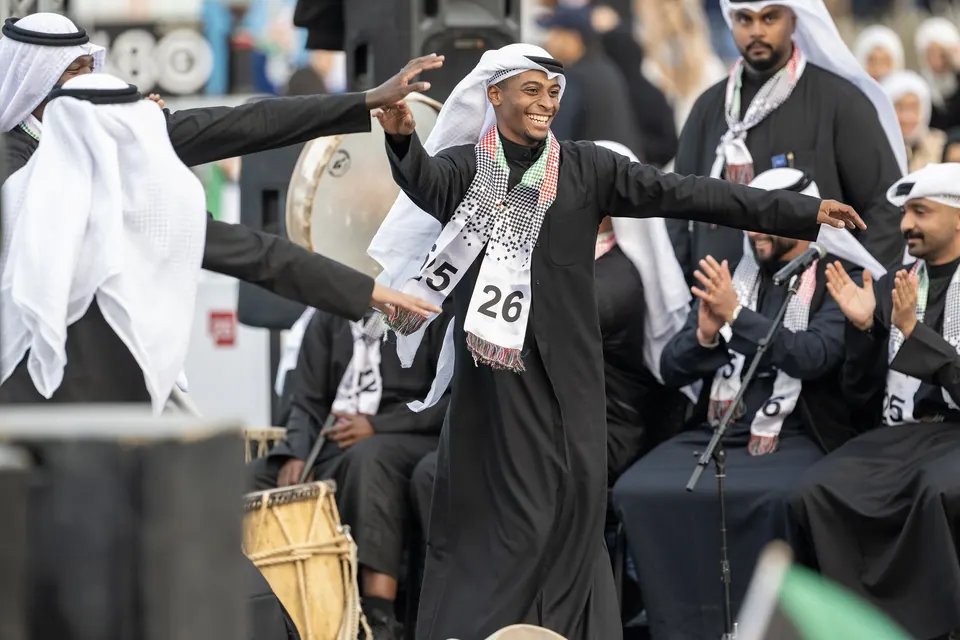
Kuwait’s music grew from the sea and the desert: the fijiri songs of the pearl divers, the sawt songs of urban gatherings, and the ardah, a dance with drums and swords performed at celebrations.
From the 1960s Kuwait became a centre of theatre and television for the whole Gulf; its comedies and dramas are still watched across the region, and Bait Al-Othman has a museum devoted to them. Today the Sheikh Jaber Al-Ahmad Cultural Centre stages everything from Arabic music to visiting orchestras, and Kuwait was named Arab Capital of Culture and Media for 2025.
06
History
Independence, invasion and liberation
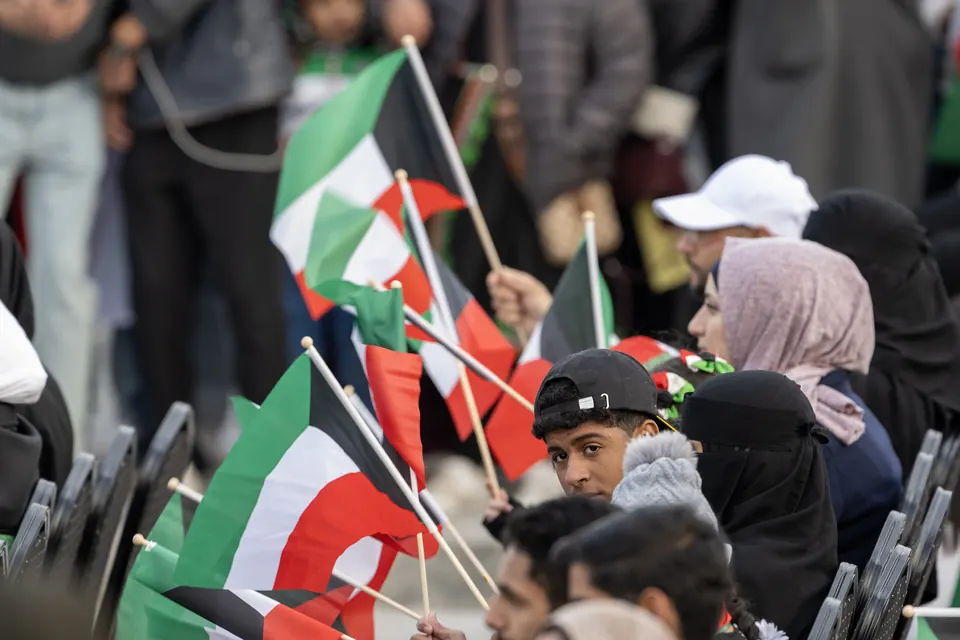
Kuwait became fully independent on 19 June 1961, adopted its constitution in 1962 and elected its first National Assembly in 1963 — the first elected parliament in the Gulf states. National Day is celebrated on 25 February, the anniversary of the accession of Sheikh Abdullah Al-Salem Al-Sabah.
On 2 August 1990 Iraq invaded Kuwait. Seven months of occupation ended on 26 February 1991, now Liberation Day, after an international coalition expelled Iraqi forces; retreating troops set hundreds of oil wells on fire. Museums such as the Al-Qurain Martyrs Museum and the Remembrance Museum in Al Shaheed Park keep the memory of those months.
Timeline
Four thousand years in brief
-
c. 2000 BC
Dilmun-era settlements flourish on Failaka Island.
-
3rd c. BC
After Alexander the Great, Failaka — known to the Greeks as Ikaros — gains a fortress and temple.
-
1752
Traditional date for the beginning of Al-Sabah rule over the town of Kuwait.
-
1899
The Anglo-Kuwaiti Agreement makes Kuwait a British protectorate.
-
1920
The Battle of Jahra; the last city wall is built.
-
1938
Oil is discovered at Burgan; exports begin in 1946.
-
1961
Independence on 19 June; the constitution follows in 1962.
-
1979
The Kuwait Towers are inaugurated.
-
1990–91
Iraqi invasion on 2 August 1990; liberation on 26 February 1991.
-
2016–18
The Sheikh Jaber Al-Ahmad and Sheikh Abdullah Al-Salem cultural centres open.
-
2019
The Sheikh Jaber Al-Ahmad Al-Sabah Causeway opens across Kuwait Bay.
-
2020
Al Sadu weaving is inscribed on UNESCO’s Representative List.
-
2025
Kuwait is Arab Capital of Culture and Media.